Cute Bear and Bunny Christmas Clipart Review
As a designer who spends more time troubleshooting stitch density than actually designing, I approach every new asset with a mix of optimism and skepticism. The holiday season is the Super Bowl for handmade goods, and the margin for error is non-existent. If an embroidery design fails to translate cleanly from screen to fabric, it doesn’t just look bad; it becomes dead inventory. That is why I take my time evaluating assets like the Cute Bear and Bunny Christmas Clipart before committing them to a client’s order or my own shop’s inventory.
This particular piece falls under the broader category of Illustrations, but in the world of machine embroidery, illustrations are only as good as their structural integrity. My goal here is not to simply tell you that these characters are "adorable"—though they certainly are—but to analyze how this machine embroidery design performs when subjected to the physical realities of needle, thread, and fabric tension. Is it a viable commercial product? Does it hold up on a busy craft fair table? Let’s dive into the practical details.
First Impressions and Visual Personality
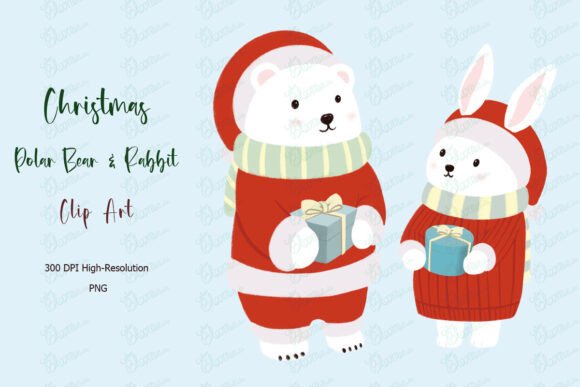
The immediate appeal of the Cute Bear and Bunny Christmas Clipart lies in its balance. Too often, holiday designs lean too heavily into clutter, resulting in a visual noise that disappears once stitched. This design, however, maintains a clear focal point. The interaction between the bear and the bunny suggests a narrative without requiring complex background elements that might distract from the main subject.
From a design perspective, the shapes are rounded and soft. In embroidery, curves are your friend because they distribute tension evenly across the hoop. Sharp angles can lead to puckering if not backed correctly, but the organic flow of these characters suggests a forgiving structure. The mood is cozy, nostalgic, and distinctly festive. It evokes the feeling of a winter storybook, which translates beautifully into tangible products. When I look at this, I don’t just see pixels; I see potential texture. The thick outlines implied by the illustration style suggest that a robust satin stitch could define the edges beautifully, providing crisp definition against various fabrics.
Real-World Application: Where This Design Shines
I recently simulated placing this design on several common handmade product categories to see where it fits best. Here is how it performed in those scenarios:
- Custom Apparel and Sweatshirts: The scale of the Cute Bear and Bunny Christmas Clipart works exceptionally well on the chest area of crewneck sweatshirts. The contrast between the plush fleece of the garment and the smooth sheen of polyester embroidery threads creates a premium feel. It feels less like a logo and more like a statement piece, which drives higher perceived value in custom apparel.
- Baby Embroidery and Nursery Decor: There is something inherently safe and gentle about this character pairing. For baby embroidery projects, such as onesies or receiving blankets, the lack of aggressive colors or sharp lines makes it ideal. Parents want items that look soft to the touch, and this design promises exactly that. It also translates well to larger formats like pillow covers or wall hangings for nursery decor, where the characters can be enlarged to fill the space without losing clarity.
- Tote Bag Design and Aprons: Canvas and cotton twill are sturdy bases that handle fill stitch areas well. Placing this design on a canvas tote bag creates an instant gift-ready item. Similarly, on a kitchen apron, the whimsical nature of the bear and bunny adds a touch of personality to a utilitarian item. It breaks the monotony of standard holiday patterns and stands out on a shelf full of generic mugs and ornaments.
- Embroidered Patches: One of the most versatile uses for this asset is as an embroidered patch. The self-contained nature of the two characters means it can easily be given a border or applied as a standalone badge on denim jackets, beanies, or backpacks. This opens up opportunities for commercial embroidery businesses looking to create accessory-focused products.
Strategic Considerations for Stitching Success
While the visual concept is strong, execution is where many designers stumble. Before you send this file to production, there are critical technical checks you must perform. The transition from digital art to physical stitch requires careful planning.
First, consider the stitch density. If the original illustration has very fine, hairline details, these may not survive the stitching process, especially on textured fabrics. You need to inspect the small details—perhaps the eyes or tiny accessories held by the characters—to ensure they won’t merge into a blurry blob. If the design relies on subtle shading, verify that the thread colors chosen provide enough contrast. A light beige thread on a cream fabric will disappear, ruining the finished product.
Another crucial factor is the hoop size relative to the design dimensions. Ensure the bounding box of the Cute Bear and Bunny Christmas Clipart fits comfortably within your machine’s maximum hoop capacity with a little margin for error. Attempting to stretch a design beyond its optimal hoop size leads to registration errors and misaligned stitches.
You should also evaluate the fabric choice. While this design looks great on smooth cottons and fleeces, it may struggle on highly textured materials like chunky knits or looped towels unless a heavy-duty stabilizer is used. On stretchy fabrics, such as jersey knit t-shirts, proper stabilizer selection is non-negotiable to prevent distortion. Always test on scrap fabric first. This simple step can save hours of rework and prevent customer complaints regarding puckering or thread breakage.
Impact on Brand and Customer Trust
In the crowded marketplace of Etsy sellers and small shop owners, presentation is everything. A high-quality embroidery project signals professionalism and attention to detail. When customers receive a personalized gift or a boutique item that features clean, precise stitching, it builds trust in your brand. They perceive the item as durable and well-made.
Conversely, a poorly executed design can undermine even the cutest artwork. If the Cute Bear and Bunny Christmas Clipart is stitched with loose threads or uneven density, it looks cheap, regardless of how adorable the source image is. By taking the time to optimize the digital embroidery file and choosing the right materials, you elevate the entire craft business experience. Customers are willing to pay a premium for items that feel thoughtfully crafted, and that premium comes from the confidence that the design was vetted for real-world use.
Final Verdict for Designers and Sellers
The Cute Bear and Bunny Christmas Clipart is a strong contender for holiday collections. Its charm is undeniable, and its structural simplicity makes it forgiving for both beginners and seasoned embroiderers. However, success depends entirely on your preparation. Do not assume the file is ready-to-stitch out of the box. Verify the license terms if you plan to sell finished items or use it in design assets for clients. Confirm whether it includes necessary layers for applique design techniques if you wish to add dimension.
For those looking to expand their Etsy listings or small shop product range, this design offers versatility across multiple categories—from holiday embroidery gifts to everyday wearable art. Just remember to check your thread colors, respect the limits of your stabilizer, and always prioritize the tactile quality of the finished product. When done right, this clipart isn't just a cute image; it's a profitable, beloved addition to any maker's portfolio.