Christmas Deer Christmas Ornament Design Illustrations Review
As a graphic designer who spends half my life balancing brand guidelines and the other half trying to make clients fall in love with their own products, I am always skeptical of new assets. We have all been there: you find a graphic design asset that looks perfect in the preview window, but once you drop it into your actual layout, it feels cheap, off-brand, or just wrong. That is why I treat every review like a real client consultation. Today, I am putting the Christmas Deer Christmas Ornament Design through its paces to see if it holds up in a professional workflow.
I recently took on a project for a boutique handmade candle company launching a limited-edition holiday collection. The brief was clear: they wanted something warm, rustic, yet sophisticated enough to sit on a high-end retail shelf. They didn’t want generic clipart; they wanted character. This is where I evaluated whether this specific illustration would fit the bill. Here is my breakdown of how this design performs in real-world commercial applications.
The First Impression and Visual Mood
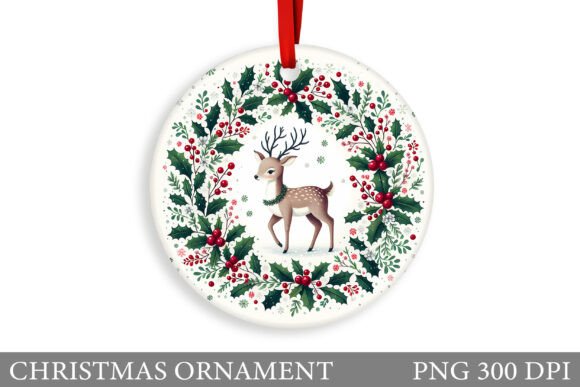
When you first look at the Christmas Deer Christmas Ornament Design, the immediate takeaway is its balance between whimsy and elegance. It does not scream "discount store"; instead, it whispers "handcrafted quality." The visual elements feel cohesive, likely leaning into a modern vintage or contemporary folk art style. For a brand identity, this is crucial. In an era where consumers are tired of overly polished, sterile corporate aesthetics, there is a massive demand for creative design that feels human and tactile.
This asset naturally fits projects that require emotional appeal. It creates a mood of nostalgia and comfort, which is exactly what brands are chasing during the Q4 season. Whether you are designing packaging for small batch goods or creating social media graphics for a local event, this deer ornament provides a strong focal point without overwhelming the viewer. It suggests a story—perhaps a woodland retreat or a cozy winter evening—which helps build visual trust with your audience before they even read your copy.
Performance in Real Design Situations
So, where does this illustration actually live in your workflow? I tested this concept across several common use cases for small business branding and digital product creation.
- Packaging Design: This is the sweet spot. Imagine this design embossed on kraft paper tags attached to gift boxes. The intricate details of an ornament shape translate beautifully to physical textures. It elevates a simple box into a premium product mockup.
- Social Media Graphics: For Instagram posts and Pinterest pins, this design works as a hero graphic. It captures attention in a crowded feed because of its distinct silhouette. However, it needs breathing room.
- Printable Wall Art: As a printable design, it offers great value for buyers on Etsy. It can be scaled for large format prints or used in smaller gallery wall arrangements.
- Merchandise and T-Shirt Design: If you are a print-on-demand seller, this vector-friendly concept (assuming proper file formats) translates well to apparel. It works particularly well on dark heathered fabrics where contrast can be managed carefully.
- Cricut Projects and Sticker Design: For crafters, the clean lines of an ornament design are ideal for vinyl cutting. It allows for precise weeding and results in a polished final product for decals or sticker design sheets.
In terms of marketing visuals, this asset supports a narrative. It isn't just a decoration; it is a thematic anchor. When used in a design bundle for a seasonal campaign, it helps unify disparate elements under one cohesive aesthetic.
Where the Asset Works Best
To get the most out of the Christmas Deer Christmas Ornament Design, place it in large layout areas where detail can be appreciated. It excels as a decorative accent on editorial design pieces, such as holiday newsletters or magazine layouts. It also serves as a powerful supporting brand element when repeated in patterns for wrapping paper or textile designs. Because it is an SVG design (typically), you can manipulate its scale without losing quality, making it versatile for both web design and large-format banners.
Where You Should Use It Carefully
No asset is perfect for every scenario. There are times when this design might work against you. Avoid using it in very small sizes, such as favicon icons or tiny UI elements, where the ornamental details will turn into muddy pixels. Similarly, be cautious with crowded layouts. If you are trying to maintain a strict visual hierarchy and need the text to dominate, this illustration might compete for attention.
It may also clash with minimalist branding. If your client’s aesthetic is strictly Swiss-style minimalism with heavy sans-serif typography, this rustic ornament might feel out of place. Furthermore, on low-contrast backgrounds, the subtle shading of the ornament could get lost, reducing its impact. Always test these boundaries before committing to a final proof.
Technical Considerations for Professional Use
Before you hand this off to a printer or upload it to a client portal, there are technical checks every serious designer must perform. These steps ensure that your commercial license protects you and your client.
- Black and White Test: Convert the design to grayscale. Does it still hold its structure? If the design relies entirely on color to define its shape, it may fail in black-and-white print runs or monochrome branding scenarios.
- Contrast Checks: Preview the asset on both light and dark backgrounds. An ornament design often has internal shadows that might disappear on white paper or blend in on black fabric.
- Font Pairing: Typography makes or breaks a design. Compare this illustration with serif fonts for a classic look, sans serif fonts for modernity, or script/handwritten fonts for a personal touch. A display font with similar weight to the illustration’s strokes often creates the most harmonious balance.
- File Format Inspection: Check if PNG transparency is included for quick web use, but verify the SVG or vector editability for production. Ensure paths are closed and layers are organized. This is critical for sublimation design or large-scale printing.
- Mockup Validation: Never trust the flat preview. Place the asset on real mockups of mugs, tote bags, and greeting cards. This reveals how the design interacts with curves, edges, and material textures.
Final Verdict for Your Next Project
The Christmas Deer Christmas Ornament Design is more than just a cute picture; it is a versatile digital product that can elevate a brand’s holiday presence. For small business branding, especially in the handmade or artisanal sector, it provides the warmth and professionalism needed to convert browsers into buyers. It respects modern design principles by being distinctive yet adaptable.
Whether you are a marketer building a seasonal campaign, a crafter starting a Cricut project, or a publisher working on web design visuals, this asset earns its place in your library. Just remember: good design is about context. Use it wisely, respect the negative space, and ensure your licensing is clear. When done right, this ornament won’t just decorate your project—it will define its character.